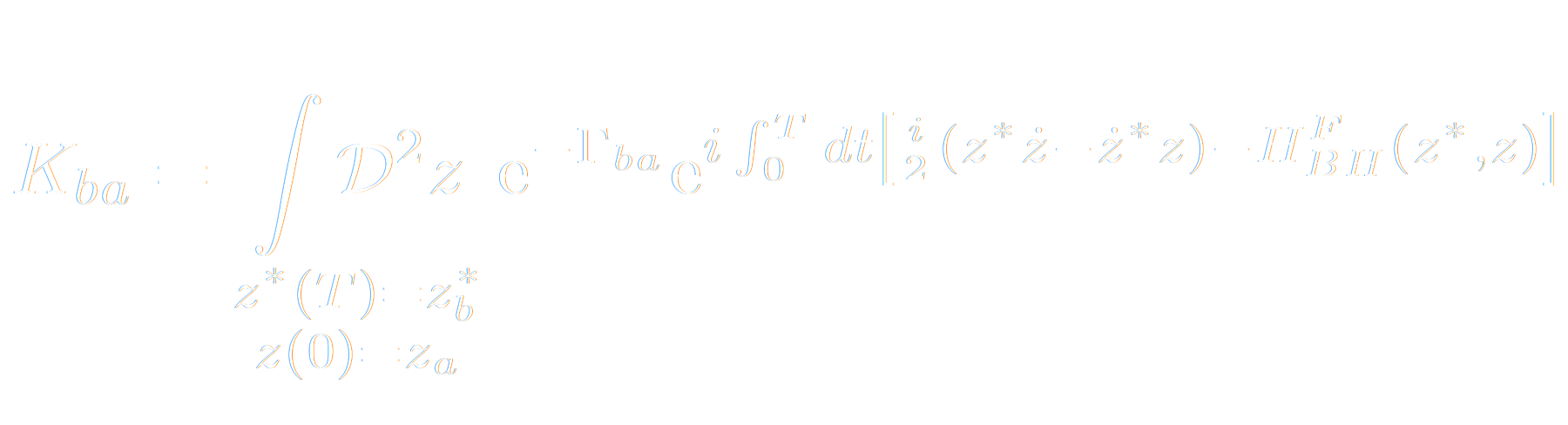
The path integral formalism, since it was first introduced by R.P. Feynman,
has been proven a powerful tool for understanding and handling quantum mechanics,
quantum field theory and statistical mechanics. The introduction of the overcomplete base of
coherent states has expanded the concept of path integration into a
complexified phase space enlarging its range of possible applications in many
areas of physics. However, it is not straightforward to define the coherent-state
path integral in a continuous form. We have given simple recipes to define both the
bosonic [
9] and the
spin [
13] coherent-state
path integral in the continuum.
These definitions can be the starting point for systematic approximations for a variety systems,
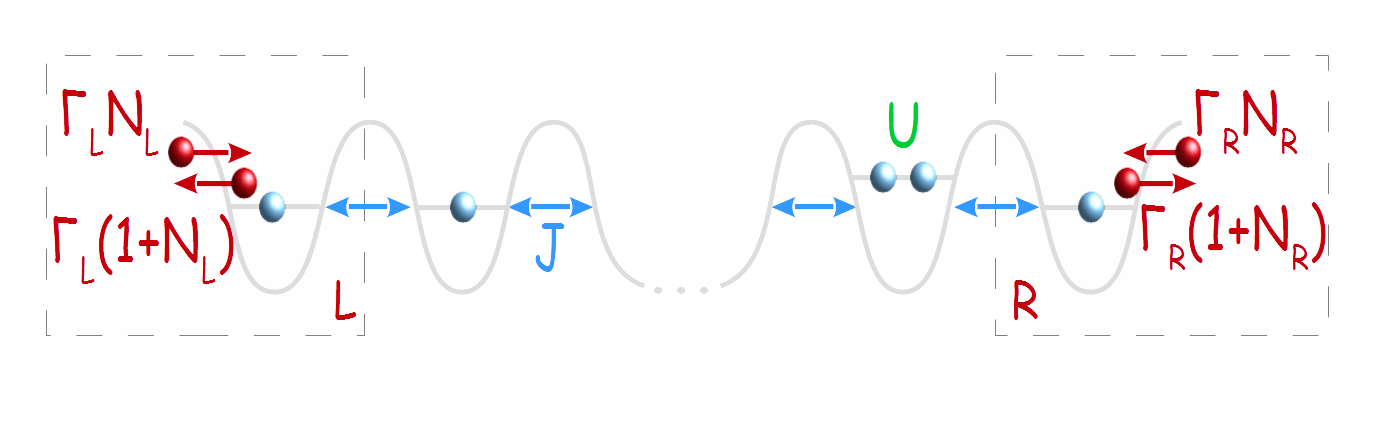
such as the Bose-Hubbard lattices and spin Hamiltonians.
Furthermore, with the aid of the Feynman-Vernon influence functional formalism,
this approach can be generalized to both Markovian [
12]
and non-Markovian [
14]
open many-body systems.